Entre la Leyenda & the Truth

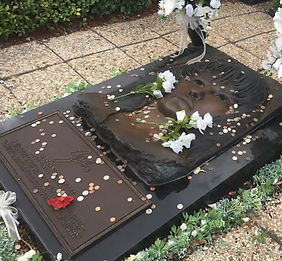
Selena Quintanilla was not just the Queen of Tejano Music. She was the voice that crossed cultures, a fashion icon, and a symbol of Mexican American pride. Her life was filled with success, but her tragic death left behind mysteries and questions that people still talk about today (Contreras). She became one of the biggest Latin artists in the world, winning 3 Grammy awards and selling out arenas (Castillo). She would always not only be her music but also for her fashion lines and her role as a trailblazer for Latina women in entertainment (Contreras). However, in 1995, her life was cut short when Yolanda Saldívar murdered her, the president of her fan club. Now there are several conspiracies about Selena. Some people believe that Selena’s murder was not just the act of Yolanda Saldívar, but part of a bigger plot involving money, jealousy, and business (Contreras). Others suggest that Selena’s fame and rising crossover success made her a target, and that her death may have been influenced by people who wanted to control her career or profits (Smithsonian Magazine). Another theory is that there are still hidden details about her death that were never revealed to the public, which fuels suspicion and keeps her story alive. Let us dig into available evidence and find out what really happened to Selena Quintanilla.
Selena Quintanilla-Pérez, often remembered as the “Queen of Tejano Music,” left an imprint on music and culture that has lasted long after her passing. She was more than just a performer. She was a symbol of possibility for many people, especially young Latinas who saw themselves reflected in her success. Her life and career showed how character traits can shape a person’s legacy. Selena’s charisma, determination, and ambition helped her stand out from other artists, and they explain why her influence still matters decades later.
Selena’s charisma was one of the first things people noticed about her. On stage, she knew how to grab attention with more than just her voice. She often designed her own outfits, giving her performances a look that matched her personality. As Elle explains, “Selena’s sparkly bustiers and bold leather jackets became part of what made her so memorable as both a singer and a style icon (“Reflecting on Selena Quintanilla Pérez’s Fashion Legacy”)”. This was not just fashion; it was how Selena connected with people. Fans felt like they were seeing her real confidence and creativity through the clothes she wore.

What made her charisma even stronger was how she treated others. She had a reputation for being down-to-earth and approachable despite her fame. Elle points out that, “Selena’s style choices continue to inspire even now, showing how much her stage presence resonated with people beyond her music (“Reflecting on Selena Quintanilla Pérez’s Fashion Legacy”)”. Selena’s ability to light up a stage while also making fans feel close to her showed the depth of her charisma. That charm is part of why her legacy has not faded because people remember how she made them feel, not just what she sang.

Alongside her charisma, Selena showed determination throughout her career. She began by dominating the Tejano music scene, but she had bigger dreams. She wanted to cross over into the English-language market, which was a huge challenge at the time. The Los Angeles Times reported that, “Selena was working on her first English album and was expected to join the ranks of major stars like Janet Jackson and Madonna (Bennett).” Her willingness to take on this challenge showed how determined she was to keep pushing her career forward.
This determination was not just about reaching fame; it was about breaking barriers. The English-language music industry was competitive, but Selena kept working toward that goal anyway. The Los Angeles Times explains, “how close she was to her breakthrough at the time of her death, which shows just how committed she had been to achieving it (Bennett).” Her persistence in chasing crossover success proves that she never settled for what she already had. Instead, she pushed herself further, showing determination that inspires people even now.
Selena’s ambition stretched beyond her music career. She dreamed of becoming a businesswoman and building something that would last outside of the stage. She opened her own boutiques and played an active role in designing the clothing sold there. According to Elle, “Selena was not only focused on singing, but she was also building a business empire that reflected her creativity and vision (“Reflecting on Selena Quintanilla Pérez’s Fashion Legacy”).” This shows that she was not satisfied with only being an entertainer. She wanted to succeed in multiple areas, which made her stand out as more than just a pop star.
Her boutiques and clothing line highlighted how big her goals really were. By combining music and fashion, she showed that an artist could branch out and make an impact in more than one industry. Elle emphasizes that, “Selena’s fashion line was a true extension of her artistry and personality (“Reflecting on Selena Quintanilla Pérez’s Fashion Legacy”).” Selena’s ambition gave her the chance to be remembered as both an artist and an entrepreneur, proving she had the vision to create something larger than herself.
Selena’s charisma, determination, and ambition were the qualities that turned her into a legend. Her charisma drew people in and created unforgettable performances. Her determination pushed her from Tejano music into the mainstream, showing she was not afraid of challenges. Her ambition allowed her to explore fashion and business, expanding her influence even further.
There are three theories surrounding Selena Quintanilla’s death (83). First, focusing on the idea that Yolanda Saldívar may not have acted alone (83). The next theory is presented in Selena’s Secret focuses on money and reputation as the true motives behind the killing (84). The final conspiracy involves Saldívar’s false claim that she had been raped in Mexico, a lie that lured Selena to the motel where she was killed (92-94). Let's uncover the truth.
One major conspiracy suggests that Yolanda Saldívar was not acting alone but protecting someone else or hiding something dangerous. Arrarás explains, “During her standoff with police, Yolanda Saldívar was recorded sharing ‘powerful information’ and making comments that hinted others could have been involved, though those recordings were never made public” (83). These statements imply that Saldívar may have been under the control or influence of someone else. If her fear came from threats or manipulation, it means Selena’s death could have been part of a larger plan to protect powerful people or dark secrets. This claim challenges the accepted narrative that Saldívar acted out of jealousy and instead raises questions about what she knew and why that information was never revealed.

Another theory presented in Selena’s Secret focuses on money and reputation as the true motives behind the killing. Arrarás reports, “Yolanda had in her possession documents and account books from Selena’s boutiques, and tensions rose when the family accused her of stealing” (172-173). This access to private financial information made Saldívar a threat to the Quintanilla family, who were trying to protect their image and Selena’s legacy (83-84). Critics believe this confrontation was not just about missing money but about silencing someone who knew too much (83). If this theory is true, it suggests Selena’s death was connected to a financial cover-up, turning what seemed like a personal betrayal into a desperate act to hide damaging truths.
The final conspiracy involves Saldívar’s false claim that she had been raped in Mexico, a lie that lured Selena to the motel where she was killed (188-189). Arrarás writes, “When Yolanda told Selena she had been raped, hospital staff reported no physical signs of abuse and said she showed symptoms of depression, not trauma” (188-189). This statement reveals that Saldívar may have fabricated the story to make Selena meet her alone and unprotected (188-189). Arrarás’s findings add a darker twist, suggesting that the encounter was staged from the beginning and that the shooting may have been premeditated rather than emotional (188-189). These conspiracies together point to a haunting truth: Selena’s murder was not just an act of jealousy, but a tragic event fueled by fear, deception, and secrets that may never be fully uncovered (189).
The three conspiracies surrounding Selena Quintanilla’s death, the financial lies, the false rape story, and Yolanda’s emotional breakdown, show that Selena’s murder was surrounded by far more deception than the public originally imagined. The book reveals that Yolanda repeatedly created dramatic events, including fake panic calls and an invented rape, which Arrarás identifies as “a new alibi” meant to manipulate Selena emotionally (Arrarás 158). Yolanda’s actions were calculated rather than impulsive. Together, these conspiracies show that the tragedy was built on lies, manipulation, and fear instead of a single emotional outburst. While we may never know every detail of what happened in room 158, Selena’s Secret makes it clear that Selena’s final hours were shaped by betrayal from someone she trusted deeply. In the end, the conspiracies remind us that the world did not just lose a superstar, it lost a young woman whose kindness was exploited, leaving questions that
still haunt fans today.